Your Church's Front Door Moved to a Google Search
The New Digital Frontier: Welcome Begins Before the Parking Lot

Your church may still have glass doors, a welcome team, and somebody in the parking lot waving cars in with what I call "Disney on a budget" energy. But for a growing number of people, none of that is the first door they touch. Before they drive, they search. Before they sit, they scroll. Before they introduce themselves, they quietly decide whether your church feels clear, safe, and human.
The front door did not disappear. It moved.
That move is not a loss of opportunity. It may be one of the greatest openings the Church has been given in a generation. Pew reports that 96 percent of U.S. adults use the internet and 91 percent own a smartphone. A national local-search study found that 80 percent of consumers look online for local businesses at least weekly, while 32 percent do so every day or even several times a day. At the same time, Barna found that 74 percent of American adults want to grow spiritually, and 44 percent say they are more open to God than they were before the pandemic.
The Door Moved
Put those numbers together and a remarkable picture appears: people are spiritually curious, digitally connected, and privately searching. The question is not whether they are looking. The question is whether they can find us when they do.
I often say, "Hospitality starts where curiosity starts, which is usually a phone." A Google result, map listing, website, review, reel, or text thread is no longer merely communication. It is a foyer. People arrive there carrying the same questions they once carried across a church parking lot: Will my children be safe? What should I wear? Will anyone understand my story? Is there room here for someone like me?
Findable Is a Ministry Word
Churches can spend enormous energy perfecting the room while neglecting the road that leads to it. We create beautiful living rooms and forget the front porch. An outdated service time, an incorrect map pin, a confusing homepage, or an unanswered message can quietly communicate, "We were not expecting you." In SOCi's study, 47 percent of consumers said that if an online profile showed a business as open but they arrived to find it closed, they would look for a similar organization nearby.
Findable is a ministry word. Accuracy is an act of hospitality.
This is not a call to chase algorithms. It is a call to remove unnecessary distance between a searching person and a welcoming church. Your Google Business Profile, service times, parking instructions, children's information, accessibility details, and Plan Your Visit page should all tell the same simple truth. The porch light is on. We have been expecting you.
Digital Is a Door, Not the Destination
Church leaders have already accepted much of this reality. Pushpay's 2024 survey (Pushpay, State of Church Technology 2024, pp 6, 8-9) of more than 2,200 U.S. church technology decision-makers and influencers reported that 90 percent of churches offered a hybrid ministry model and 91 percent livestreamed worship services. Yet streaming is not the finish line. Views are not disciples, and clicks are not community. Digital is a front door, not the living room.
The goal is movement: from search to conversation, from conversation to trust, from trust to a table, a group, a worship service, and a life of following Jesus. Barna found that 40 percent of churched Christians were open to inviting someone to an online service. Among non-Christians, watching an online service alone was the only church activity that reached double-digit interest, at 12 percent. That is not rejection. It is caution. The digital frontier lowers the social cost of a first yes.
Put a Shepherd Near the Threshold
A digital front door must still lead to a human being. In a business context, Harvard Business Review found that organizations responding to online inquiries within an hour were nearly seven times more likely to qualify the inquiry than those waiting even one hour longer. The Church should never reduce people to leads, but we should receive the lesson: timely response communicates value. A fast, warm reply says, "You are not interrupting us. You matter."
This week, ask someone who does not work at your church to search for it on a phone. Can they find accurate service times, the right entrance, children's information, and one obvious next step in less than five minutes? Then submit a question. Does a real person answer with warmth? Assign one person to steward the details weekly. Technology may open the door, but only people can offer pastoral presence.
Over the years, our team at VisitorReach has had the privilege of helping hundreds of churches strengthen this new front door, increase meaningful front-door traffic, and build intentional pathways that move people from digital curiosity toward an actual visit. That experience has reinforced something important: traffic is not the goal; people are. Technology can help identify curiosity, begin a conversation, and shorten the distance between a search and a church, but clear next steps, consistent follow-up, and genuine human connection are what help turn an online moment into an in-person encounter. The best digital strategy is not one that keeps people online. It helps them take the next faithful step toward community.
The Frontier Is Already Full of People
Paul traveled Roman roads, entered marketplaces, listened to the questions of a city, and spoke the gospel in language people could understand. He changed the wrapping without compromising the message. His conviction was clear: "by all possible means I might save some" (1 Corinthians 9:22, NIV).
In my new book, The New Roman Road, I talk in depth about how our roads now glow in our pockets. They run through search bars, maps, message threads, and screens. The Church's assignment is not to win the internet. It is to be faithfully present when a neighbor begins to wonder whether God has forgotten them.
So what is our challenge today? Open the door. Turn on the porch light. Put a shepherd near the threshold. Someone in your city is searching for more than a church. They are searching for hope. Let them find both.
If you would like to talk further about how VisitorReach of VisitorTap can help your church strengthen its digital front door and move more online connections toward real visits, we would welcome a call and the opportunity to learn about your church. Visit www.visitorreach.com
About the Author
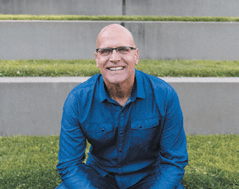
Marc Estes is a trailblazing thought leader, author, and CEO of VisitorReach™. With four decades of leadership across faith and culture, Marc brings fierce clarity, hard-won wisdom, and catalytic vision to help churches rise, leaders lead, and people live on mission in today’s ever-changing world.
To learn more about other books and articles from Marc Estes, go to www.marcestes.com.
Last Updated
Learn more about VisitorReach or VisitorTap
Share on:
Author(s)
Marc Estes
Co-Founder & CEO, VisitorReach


