Why Clip Editing Is Killing Creative Energy
The current obsession with click-driven clip editing threatens the depth of creative work, incentivizing performance over the stillness and flow required for meaningful spiritual resonance.
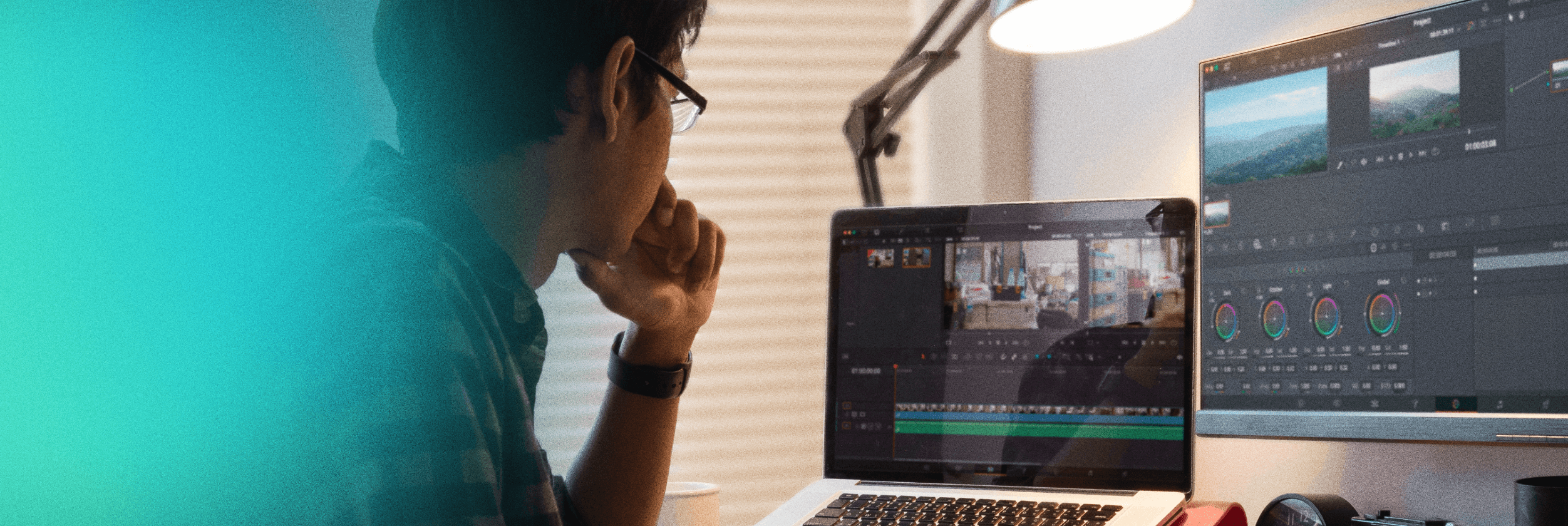
Somewhere along the way, creativity stopped being about meaning and started being about moments.
Not moments in the human sense—moments of insight, connection, or beauty—but moments engineered to survive a scroll. Three seconds. Five seconds. Ten, if you’re lucky.
Welcome to the age of clip editing.
Clip editing promises efficiency, reach, and relevance. It tells creators: Don’t worry about the whole story. Just give us the hook. But what it doesn’t tell you is the cost—and the cost is creative energy itself.
Creativity Thrives on Flow, Not Fragments
True creativity requires immersion. It needs time, space, and continuity. Whether you’re writing, speaking, designing, or building something new, the best work comes when you’re allowed to stay with an idea long enough for it to grow deep.
Clip editing interrupts that flow.
Instead of asking, What am I trying to say? creators are forced to ask, Where’s the most clickable moment? The creative process shifts from exploration to extraction—mining longer work for soundbites rather than letting ideas unfold naturally.
Over time, this trains creators to think in terms of fragments rather than frameworks.
It Rewards Performance Over Presence
Clip culture doesn’t just change how content is edited—it changes how it’s created.
When you know your work will be chopped into short clips, you start performing for the edit instead of inhabiting the message. Sentences get sharper, louder, and more exaggerated. Nuance becomes a liability. Silence feels dangerous.
But presence—the kind that builds trust and resonance—requires breathing room. It requires pauses, tension, and moments that don’t immediately pay off.
Clip editing flattens all of that into constant output pressure.
It Turns Art Into Optimization
There’s nothing inherently wrong with optimization. The problem is when optimization becomes the primary creative lens.
Clip editing trains creators to prioritize:
What will spike engagement
What can be isolated from context
What feels instantly gratifying
But creativity isn’t a vending machine. Some of the most meaningful ideas need setup. They need contrast. They need a beginning, middle, and end.
When everything is reduced to a clip, creators stop taking risks. Why build something layered when only the loudest five seconds will survive?
It Drains Energy Because It’s Never Finished
Long-form work has a natural sense of completion. You write the piece. You deliver the talk. You release the film.
Clip editing has no finish line.
Once something is made, it must be endlessly repurposed, reformatted, resized, captioned, and recontextualized. The work never rests—and neither does the creator. What was once a creative act becomes a content supply chain.
That constant fragmentation is exhausting. Not because creators are lazy—but because creativity needs closure to regenerate.
What We Lose When We Only Clip
When clip editing dominates, we lose:
Depth in favor of immediacy
Wisdom in favor of wit
Meaning in favor of metrics
We lose the long arc of thought—the kind that changes how people see the world, not just how long they stay on a platform.
And perhaps most dangerously, we lose the courage to create things that don’t fit neatly into a rectangle.
A Better Way Forward
This isn’t a call to abandon clips altogether. It’s a call to reorient them.
Clips should serve the work—not replace it.
The goal of short-form content should be to invite people into depth, not convince creators to abandon it. When long-form creativity is honored first, clips can become doorways instead of destinations.
Because creativity doesn’t die from lack of talent.
It dies from being cut into pieces before it’s allowed to breathe.
Last Updated
Read Sermon Clips Are Doorways, Not Destinations
Share on:
Author(s)
Josh Burnett
Founder of Church.Tech