The Feature Is Not the Main Thing
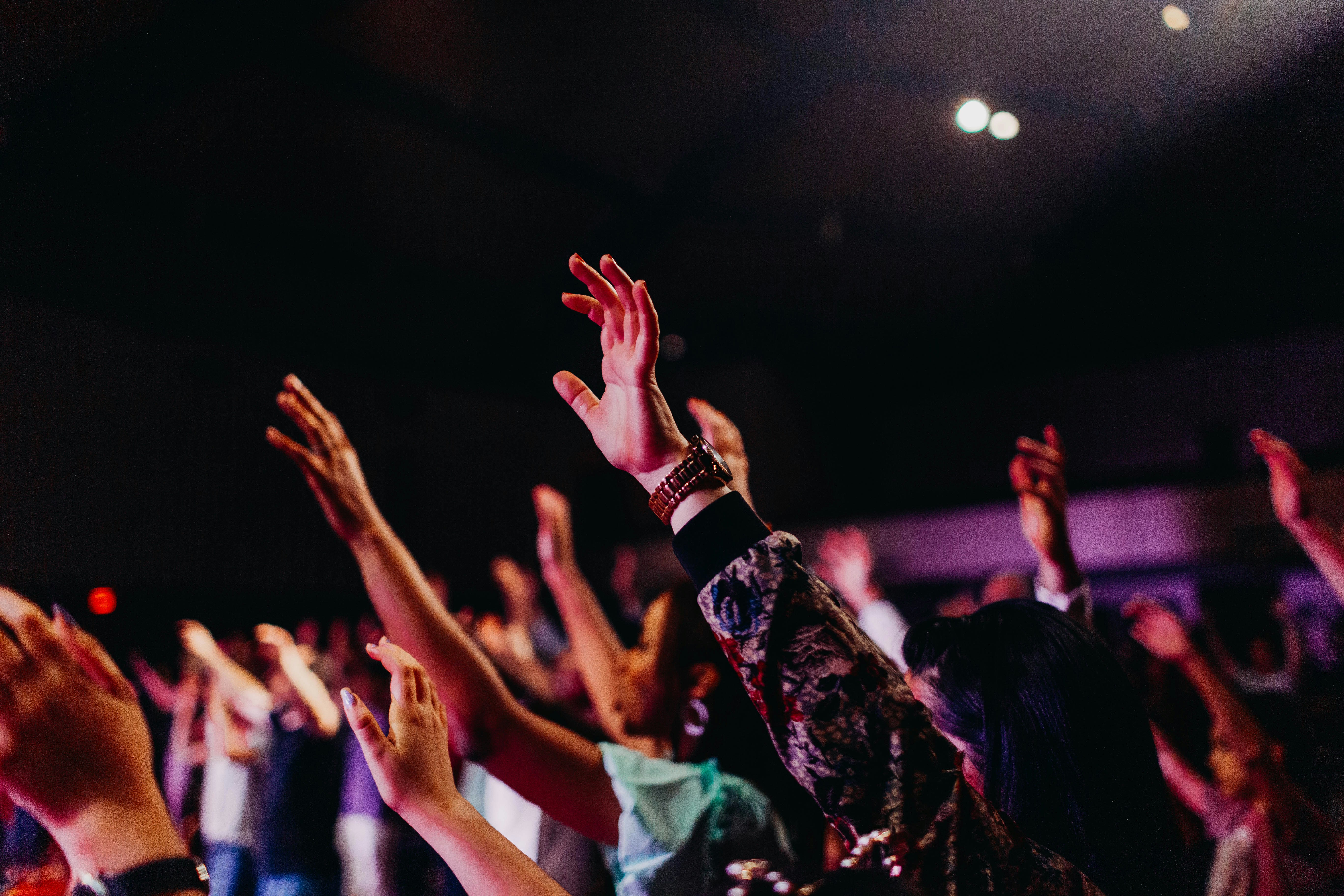
Six hundred builders recently gathered to address the urgency of AI, concluding that successful kingdom impact relies on collaboration rather than just the latest software features.

Nick Skytland

The opinions and views expressed in Perspectives content are the author’s own and do not reflect the views, values, or position of Gloo.
_______
What 600 faith-driven builders learned at Missional AI 2026
“The feature isn’t the main thing. The main thing is that kingdom impact accelerates when God’s people choose to work together.”
When YouVersion’s Gaylen Washington said that on the opening day of the Missional AI Global Summit, something in the room shifted. It was the thing everyone had come to say but hadn’t quite found the words for yet.
Over the next three days in Silicon Valley, that idea kept surfacing in keynotes, hallway conversations, demos, and prayers. Six hundred builders, pastors, investors, and researchers. One question underneath all of it: what exactly are we building this for?
The urgency is real.
Gloo’s Pat Gelsinger opened with the bigger picture. The waves of mainstream AI are already here: predictive, generative, agentic, and something beyond that still taking shape. “This is not a technology cycle,” he said. “This is a new industrial age.“
Barna Group’s David Kinnaman named the weight of the moment differently. Silicon Valley, he said, is the first city you can carry in your pocket. Every value it exports travels instantly, everywhere, to everyone. And right now, the people building those systems are mostly not asking the questions this room was asking.
Fluency is not authority.
YouVersion and Come and See worked together to show the power of collaboration. They quietly integrated their platforms, dark-launched the experiment on a Saturday, and reached 76,000 unique users with a 97% positive response. It was not that the features themselves were so impressive (but they were!) The power was in the shared mission.
Barna’s research confirmed it: practicing Christians are already integrating AI at high rates, largely without guidance or discernment. The church has a real opening here. The question is whether it will show up.
The mission is moving fast.
The numbers shared at the summit were hard to sit with quietly. Frontiers’ Ryder Wishart translated an entire Bible from Greek and Hebrew to Mandarin in 320 minutes for $12. That same work traditionally takes almost sixteen years. Come and See Foundation has set two Guinness World Records for the most translated show in history and is pushing toward 600 languages. Biblica launched a Bible assistant three weeks before the conference and had already hosted 100,000 conversations, 90% of them in languages other than English.
And yet Qhala’s Dr. Shikoh Gitau reminded the room that the Global South represents over 80% of the world’s population, and less than 10% of African languages are meaningfully represented in AI.
The systems are being designed in a few places. The consequences land everywhere.
What collaboration actually looks like.
This is where Gaylen’s words stopped being inspiration and became evidence. YouVersion launched their Developer platform on a Saturday, and one of their partners was Come and See. Seventy-six thousand unique users gave it a ninety-seven percent thumbs up. Not because the feature was impressive. Because the mission was shared.
That is the pattern this movement is after. In the Missional Labs showcase, builders from Biblingo, Frontier, Chipp, FlockConnect, Trellis, and a dozen others weren’t just pitching products. They were laying bricks for a wall. A wall, as Gloo’s Nick Skytland reminded us, is meant to protect those who live within it and allow them to flourish. And a wall that only stands when every section is aligned.
What we carried home.
Abdicated responsibility is the real thing that we have to avoid. It is closed systems that compound bias without transparency, and tools that are optimized for engagement rather than for the good of the human on the other side of the screen.
Talbot School of Theology’s Ed Stetzer drew the line clearly: AI can extend service, but it cannot carry moral responsibility. What is uniquely human is pastoral judgment, spiritual discernment, care for real people in real pain. Vocation belongs to image-bearers.
Nick put the stakes plainly: one day, people will live in communities whose faith will be deeply, irrevocably shaped by the systems we are building today. The defaults we set now are the roads everyone else will travel. That is not a reason to be paralyzed, but a reason to build with more intention, more collaboration, and more conviction than ever.
The feature was never the main thing - it was always us.
Last Updated
Learn more about the Gloo AI Hackathon
Share on:
Author(s)
Ali Llewellyn
Senior Manager, Gloo AI
Nick Skytland
VP, Gloo Developers