Shaping Tech for Good: Mirroring the Papal Encyclical’s Call to Action
The Papal Encyclical calls for safeguarding human dignity against AI's power, sparking a necessary challenge for the faith community to help build technology that serves everyone.

When one of the world's foremost spiritual leaders turns his full attention to artificial intelligence, it's worth pausing to listen carefully, and to ask what it means for those of us already in the work.
On May 25, Pope Leo XIV released his first encyclical, a formal pastoral letter meant to offer spiritual guidance on doctrines related to faith and morals as well as magisterial teaching. Much of the document focuses on the “safeguarding the human person in the time of artificial intelligence.” This is significant even for secular people because it shows how important the ethical and moral questions around AI have become. Less than four years after the launch of ChatGPT, one of the world's most recognizable religious leaders is writing at length about these concerns.
The encyclical argues that “technology is never neutral, because it takes on the characteristics of those who devise, finance, regulate and use it.” It warns that technologies like AI should serve all of humanity and not be concentrated in the hands of a few. There is a lot more, but these are the general themes. It argues that while AI can be a “valuable tool that requires vigilance”, it should not be used to exercise power; rather it must be governed by a transparent ethical code and designed to preserve our essential human characteristics. These are significant concerns that Gloo shares. In fact, they’re foundational to why our company exists.
What's striking about the encyclical is its insistence on the word "human." Not a user. Not a consumer. Not a citizen. Human. Made in the image of God — imago dei — with dignity that no algorithm can confer or revoke. That framing matters. It sets a standard that goes beyond policy or compliance. It asks whether technology is actually serving the people it touches, or simply extracting from them. That's the right question. And it's one the faith community is uniquely equipped to answer.
AI Is Neutral, but It’s Being Influenced for the Worse
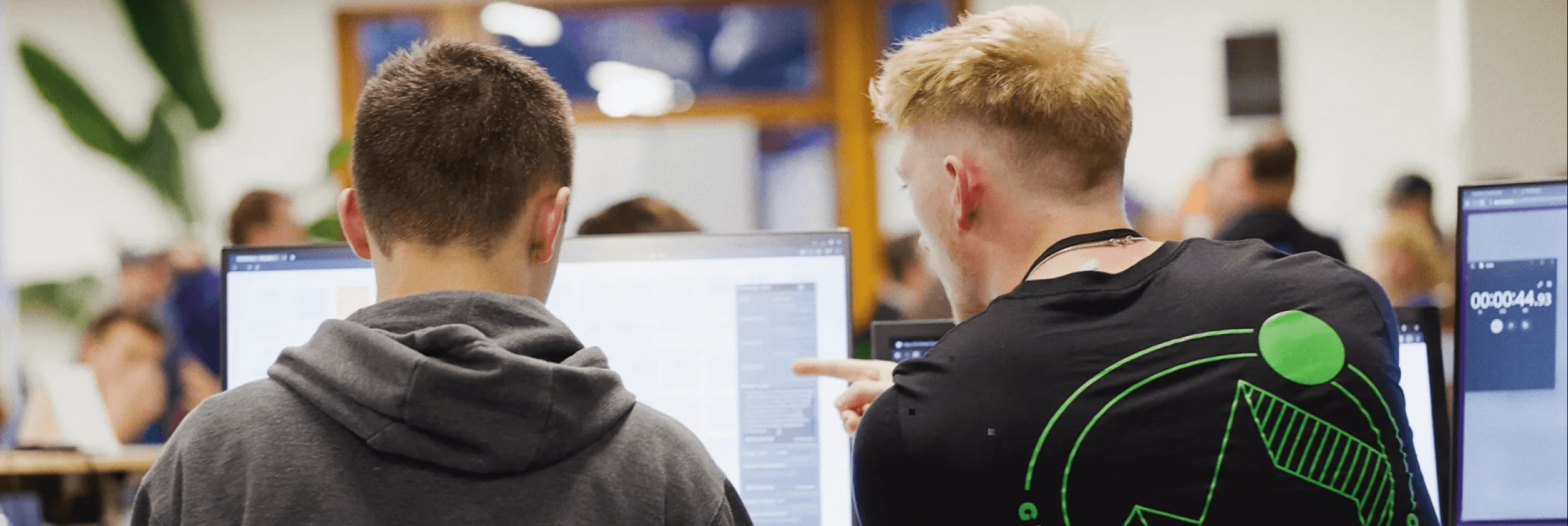
At Gloo, we believe that technology is inherently neutral. Christ himself walked on Roman roads built to transport armies, and the Apostles sailed on ships designed to fight naval battles. We’ve all seen the many positive and negative ripple effects of the Internet and personal computing. AI is the same, but some of the people with their thumbs on the scales are tipping it away from what’s good for everyone. The encyclical states that AI is shaped by the people most involved in building it. We agree. That’s why it’s so important that the faith community gets involved in building AI. We must help shape AI for good. This is the driving force behind the Gloo AI Hackathon, a global gathering of developers, engineers, and mission-aligned builders applying AI to real problems in the faith and flourishing ecosystem.
In recent remarks, Anthropic co-founder Chris Olah said, “Some might believe that matters of AI are best handled by computer scientists like myself. They are mistaken: the questions raised by AI are bigger than the AI research community, not just in their implications, but also in their nature.”
It’s a clear invitation for the faith community to get involved. We didn’t get involved in social media, and we’re all living with the consequences of that choice. Since the rise of social media and smartphones, depressive episodes among teens have nearly doubled. We cannot afford to let AI go down a similar path.
This is why Gloo has been engaging deeply to tip things back the other way. We’re deeply committed not just to succeeding as a company but also to changing the world for the better.
Gloo’s Approach to AI
Gloo’s approach to AI is grounded in our core principles of serving those who serve, advancing human flourishing, and shaping technology for good. We believe AI should be deployed in ways that support mission effectiveness, preserve relational ministry, and create practical value across the faith and flourishing ecosystem. We seek to build solutions that apply AI to real-world scenarios, be it a church, a ministry, or a nonprofit. It’s how we shape technology for good. This is foundational to our mission at Gloo which is to build the leading technology platform to serve the faith and flourishing ecosystem.
AI isn’t going back in the box; it’s up to us to make it something we can all be proud of. According to recent data from Barna, most pastors and Christians are already using AI. And increasingly, they're not just using it for practical tasks; AI is becoming a spiritual authority for some practicing Christians. That's not a reason to retreat. It's a reason to build better. There is a lot of caution, but also a lot of curiosity about it. There’s a clear appetite for it. We believe we should meet that appetite with AI grounded in our values.
That’s why we’ve been leading the global movement, from industry collaborations to developing standards and benchmarks, to create Applied AI that contributes to the flourishing of every individual and the thriving of communities. Our Flourishing AI Benchmark measures how well leading AI models support human well-being. Not on task completion, accuracy or safety compliance, but on how well their responses help people to flourish. Because what’s measured can be improved.
The broad strokes of our approach align with what is laid out in the papal encyclical. And the fact that a major religious leader spent so much time on these issues reflects how important and how urgent they are.
Theological Tensions Within AI
AI raises many theological tensions that we see and are addressing in active dialogue with frontier AI labs. The encyclical raises many of the same issues (see Paragraphs 99 and 100), such as:
What type of being is AI–It lacks a body and many human traits, but “machine” seems insufficient.
Community - Human character is formed by community. What community could an AI be a part of?
Relationships - What type of relationships can humans have with AI and how will they affect our relationships with one another?
We’ll explore these issues more in an upcoming blog post.
What We Must Do
The faith community must engage with AI now to help shape it for good. Anthropic’s co-founder asked for this scrutiny. He said we need “moral voices that the incentives cannot bend.”
That's what the faith community can provide, and Gloo exists to bring those voices together. We're a platform for the moral and theological perspectives that are actively shaping how AI gets built. Our job is to collect the best convictions from across the faith & flourishing ecosystem and ensure they're at the table as the guardrails are set.
The Gloo AI Hackathon isn’t just a fanciful idea; it’s one of the most direct ways we put Applied AI into the hands of people who are mission-aligned. Developers, engineers, and builders can join us at the Gloo AI Hackathon in October. Come help us build real AI workflows, tools, and applications for nonprofits, churches, ministries, Bible organizations, universities, and mission-driven communities. Register or learn more at www.gloo.com/ai/hackathon.
Others can use and engage with the Flourishing AI Benchmark and help us evaluate how well AI is supporting human flourishing.
For our part, we're building the infrastructure for this work. Gloo AI Studio is where developers and mission-aligned builders can start creating tools and applications grounded in the values the encyclical calls for.
We're building this together, with the faith and flourishing ecosystem, with developers willing to work on something that matters, and with anyone who believes AI should help people flourish and communities thrive. The encyclical opens a door. Let's walk through it.
Last Updated
Learn More about the Gloo AI Hackathon
Share on:
Author(s)
Nick Skytland
Vice President, Gloo Developers


